





I spent time with Zoom Workplace on a Chromebook to see whether it feels like a practical work companion or simply a meeting app stretched into a larger package. My overall impression is that it makes the most sense for people who move between video meetings, team messages, phone-style communication, and shared work material during the same day. It is free, aimed at everyone, and comes from zoom.com, so the basic appeal is easy to understand: one familiar workspace instead of several separate tools.
That convenience does not automatically make it the best choice for every Chromebook owner. Performance depends heavily on the device, the number of browser tabs or applications open, the quality of the network, and how demanding the meeting becomes. A recent Chromebook with a comfortable screen and enough memory should provide a much better experience than an entry-level model already struggling with ordinary web tasks. I would recommend trying it if your work or school contacts already use Zoom, but I would not install it solely because it promises to replace every other productivity tool.
How Zoom Workplace feels during ordinary Chromebook use
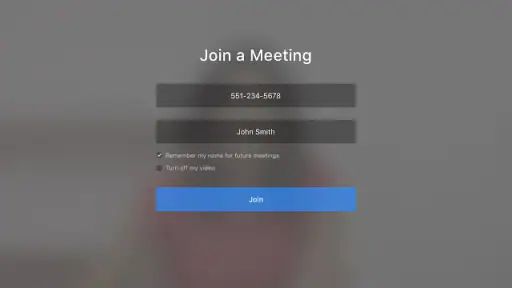
Starting a meeting without wasting time
The first thing I look for in a communication app is how quickly it gets me to the task I actually opened it for. On a Chromebook, that usually means joining a meeting, checking a message, or opening a document while several other tabs are already active. Zoom Workplace is most useful when it becomes part of a routine rather than an app I launch for one isolated call. The benefit is less about a single spectacular feature and more about keeping work conversations in one recognizable place.
For a short meeting, the experience feels straightforward. I can think about the conversation instead of learning a complicated interface. That simplicity matters when someone sends an invitation moments before a call or when I am switching from classwork to a team discussion. The app’s business focus is clear, but its Everyone age rating also makes it approachable for households, students, and small groups that do not want a specialized enterprise system just to talk.
My practical advice is to prepare the Chromebook before an important call. Close tabs that are no longer needed, pause unrelated downloads, and connect the charger if the session may run long. These are ordinary habits, but they make a noticeable difference on modest hardware. A lightweight Chromebook can feel perfectly comfortable until a meeting, screen sharing, multiple tabs, and background activity all arrive at once.
What “all in one” means in daily work
The strongest reason to choose this app is the way it brings several kinds of communication together. Instead of jumping between a video service, a chat tool, and a separate place for work notes, I can treat the workspace as a central starting point. That is particularly useful for a small team where a message leads to a call, the call leads to a follow-up, and the follow-up needs to remain connected to the original discussion.
There is a trade-off, though. A broad workspace can feel busier than a focused video-calling application. If I only need to attend occasional meetings, extra sections may feel like visual noise rather than added value. Someone who prefers a minimal tool with one obvious purpose may be happier with a simpler meeting service. Zoom Workplace earns its place on a Chromebook when I use more than one part of it regularly.
Where speed expectations should stay realistic
I would not judge the app’s speed by the time it takes to open on a single clean desktop. The more useful test is how it behaves after I have been working for hours, with several tabs open and a meeting invitation arriving unexpectedly. In that situation, the app’s perceived responsiveness is tied to the Chromebook’s available resources as much as to the application itself. A capable machine should feel more fluid; a low-cost model may need more careful multitasking.
Video communication also creates a different workload from reading email or editing a simple document. Live audio and video demand consistent processing and a stable connection. If the picture becomes delayed or the audio breaks up, the cause may be the network, the device, or both. I would avoid promising a universally fast experience because Chromebook hardware varies widely, but I do think the platform is sensible for users who keep their workspace tidy and avoid pushing an older machine beyond its comfort zone.
Heavy-use moments: meetings, sharing, and multitasking
The demanding moments are easy to predict. A long meeting with cameras active, screen sharing, chat activity, and other work open at the same time places more pressure on the Chromebook than a quick audio conversation. I found that the best workflow is to decide what I need before joining: the file to discuss, the notes to capture, and the tabs that can be closed. This reduces frantic switching and leaves more headroom for the call itself.
Screen sharing deserves special attention. If I share a browser window, I can keep unrelated personal material out of view and reduce distractions. Sharing the entire desktop is convenient, but it also exposes notifications, extra tabs, and anything else that appears unexpectedly. On a Chromebook, choosing a single window is also a sensible performance habit because it narrows the amount of activity I am asking the system to represent during the meeting.
A useful but easily overlooked workflow is to keep meeting notes outside the active conversation when the call becomes busy. I prefer a separate, already-open document rather than repeatedly changing panels inside the meeting. That makes it easier to recover the important decisions afterward and avoids turning the meeting interface into a maze. The app can centralize communication, but centralization works best when I still impose a little structure on my own process.
Recovery after interruptions
Chromebooks are often used in places with changing connections: a kitchen table, a classroom, a shared office, or a train station. When a connection drops or the device becomes overloaded, the important question is not whether interruptions can happen, but whether I can return to work without losing the thread. I treat the chat and meeting context as complementary: if live conversation is interrupted, written messages can help me identify what was already decided and what still needs attention.
I also recommend reopening only the essential work after a problem rather than restoring every tab at once. On a less powerful Chromebook, a clean restart of the immediate task can feel much better than trying to recover a crowded session. This is not a magic fix, and it cannot repair an unstable internet connection, but it gives the device a simpler job while I rejoin the conversation.
For an important appointment, I would join a little early, check the microphone, and keep the charger nearby. That small buffer is more valuable than squeezing every last minute out of the schedule. If the meeting is for work or school, I would also keep a backup way to receive messages, because no communication app should be treated as the only path to a time-sensitive conversation.
Reliability in a normal workday
My view of reliability is broader than “did the app open?” A dependable workspace should let me find the conversation I need, move between communication tasks without confusion, and continue productively after a minor interruption. Zoom Workplace is appealing here because it gathers meeting-related activity and other workplace communication under one roof. That reduces the number of separate applications I need to remember.
Still, a single workspace creates a single point of dependence. If I organize every task inside one service, an outage, account problem, or connection issue affects more of my day than it would if my tools were spread across different services. I do not see that as a reason to avoid the app, but I do see it as a reason to keep important notes and deadlines in a place I can access independently.
The app’s popularity helps in a practical way. With over five million installs and an average rating of 3.9 from around eleven thousand ratings, it is clearly familiar to a substantial Android audience. Those figures do not guarantee that every Chromebook user will have a smooth session, but they suggest that the product is not an obscure experiment. I still give more weight to how well it fits my contacts and daily habits than to its store presence.
Device constraints that matter more than the label
“Chromebook” covers a wide range of devices, from compact models designed for basic schoolwork to faster machines intended for heavier multitasking. I would pay attention to the age of the hardware, available memory, screen size, and keyboard comfort before blaming the app for every slowdown. A small display can make a broad workplace interface feel cramped, while a larger screen makes it easier to keep a meeting visible beside notes or a document.
The minimum operating-system requirement is Android 4.4, and the current version I reviewed is 6.5.5. Those details make the app accessible across older software generations, but compatibility alone should not be confused with a comfortable experience. An older Chromebook may be able to install an application and still struggle when live communication competes with other tasks. I would favor a supported, updated device whenever meetings are central to my work.
Battery behavior is another practical concern. Video sessions, brightness, speakers, and an active wireless connection can all make a long meeting feel more demanding than ordinary typing. I would not plan a full day of calls on battery alone unless I already knew how my Chromebook handled them. Plugging in before a long session is simple, and it removes one avoidable source of stress.
How it compares with simpler alternatives
Compared with a basic video-calling app, Zoom Workplace offers a wider working environment. That is useful when the same people communicate through meetings, chat, phone-style contact, and shared work material. I like not having to reconstruct the context from several unrelated tools. For a team already committed to this way of working, that continuity can save small amounts of time repeatedly throughout the day.
Compared with a chat-first collaboration service, the appeal is different. The meeting experience is the center of gravity, so it suits groups that regularly move from written coordination into live discussion. A chat-first tool may be better for teams that rarely meet face to face and mainly need persistent text channels. I would choose based on the dominant behavior of the group, not on the longest feature list.
Compared with using separate specialist applications, the all-in-one approach is convenient but less flexible. Individual tools can be better at one narrow task, and some organizations may already have established document, messaging, or calling systems. Switching everything to one workspace is not automatically an improvement if it creates duplication or forces people to abandon routines that already work.
Who will get the most from it
I think this app is a good match for remote workers, small businesses, teachers, students, and families who already exchange Zoom invitations and want more continuity around those conversations. It is also useful for a person who dislikes collecting several communication apps on a Chromebook. The free price makes experimentation easy, so I can test whether the broader workspace genuinely simplifies my day before changing my habits.
A realistic example would be a small project group preparing a presentation. One person sends a message about a missing section, the group meets to resolve it, someone shares the relevant work, and the team leaves a written follow-up for the person who could not attend. In that situation, the value comes from the connected sequence, not from any single screen. The Chromebook remains a practical control center as long as I avoid unnecessary background activity.
Who should look elsewhere
I would skip it if I only need a rare, uncomplicated call and do not want a broader workplace interface. I would also hesitate on a very old or underpowered Chromebook if live video is already unreliable in other services. In that case, a lighter communication option or an audio-first approach may be more sensible, especially for short conversations.
It may not be the right fit for someone who wants every work function handled by a separate best-in-class tool. The combined approach reduces app switching, but it can also make the workspace feel larger than necessary. Teams should consider whether their members will actually use the connected tools or merely tolerate them to reach meetings.
My performance verdict
After using Zoom Workplace on a Chromebook, I see it as a practical business app whose performance is strongly shaped by the device and the way I multitask. It feels most comfortable when I prepare the session, limit unnecessary tabs, and treat long meetings as a serious workload rather than as passive background activity. Recovery is easier when I keep notes and essential context organized instead of relying on one crowded screen.
The app is free, suitable for everyone, and developed by zoom.com. Its 3.9 average from around eleven thousand ratings gives it a mixed but respectable public impression, while more than five million installs show that it has broad reach. I would not use those figures as a substitute for testing it on a particular Chromebook, but they do support the conclusion that it is a mainstream option rather than a niche experiment.
My recommendation is conditional but positive: choose it when your contacts already work through Zoom and you want meetings, messages, phone-style communication, and shared work activity close together. Keep expectations realistic on older hardware, prepare before demanding sessions, and maintain an independent copy of important notes. For a meeting-centered Chromebook workflow, it can be convenient and capable; for occasional calls or very limited devices, a simpler alternative may be the better everyday choice.


